
Researcher: We must broaden whose understanding matters in biodiversity crisis
Scientific knowledge must go hand in hand with local, traditional knowledge, to find solutions to the biodiversity crisis that actually work.
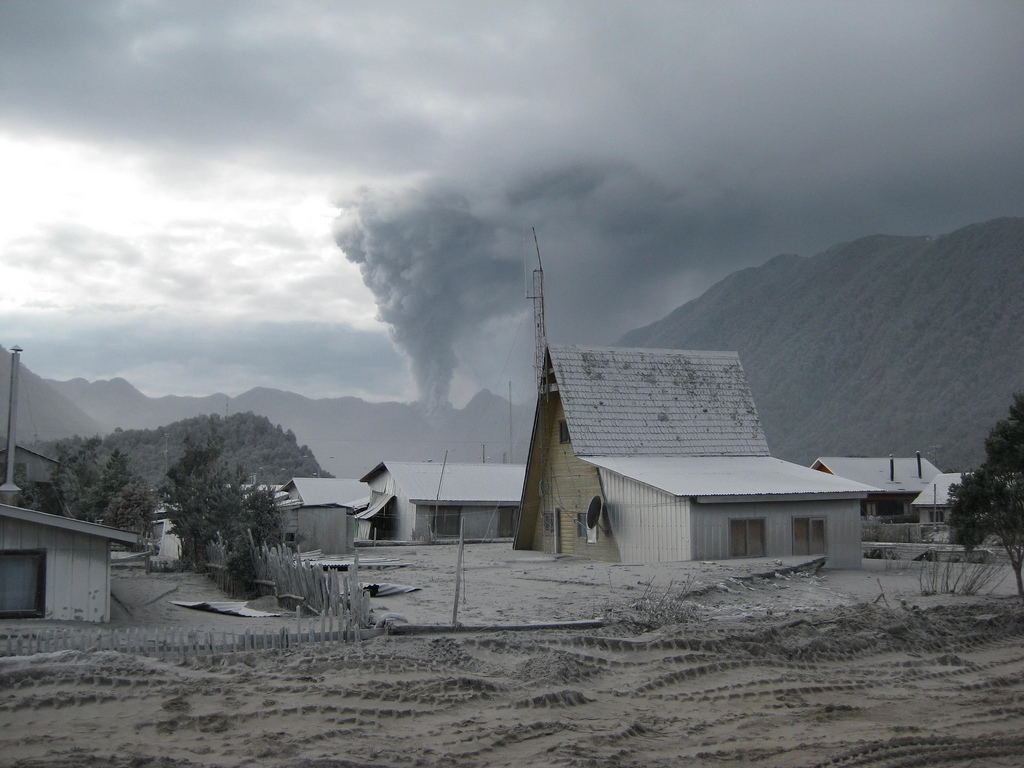
When the Chaitén volcano erupted in Chile in 2008, the country’s government promptly issued an evacuation order for the roughly 5,000 residents of the nearby town of the same name. But despite the plume of lava and ash shooting into the sky barely 10 kilometers away, a large group of residents chose to ignore the order and stay behind with their land, homes, and livestock.
For Hernán Bobadilla, this story from his home country exemplifies the tensions that can arise when different understandings of a problem clash. In this case, a clash between meticulously designed evacuation plans and people who did not see evacuation as an option.
“It is an example of what can happen when authorities and local citizens do not agree on what is important,” explains Hernán Bobadilla, a postdoc at the Department of Science Education.
“You have a government relying on technical knowledge and scientific advice to issue an order to save lives. And then you have a local population that places greater value on their relationship to the land and to their animals.”

Who defines the problem
As a philosopher and geologist Hernán Bobadilla has explored how knowledge is produced around climate adaptation. Here he sees the situation that played out in Chaitén repeat itself again and again.
“Climate change is global, but it manifests locally. When we talk about climate adaptation, it's very important that you address concerns that are local,” says Hernán Bobadilla.
“And the people best equipped not only to make decisions, but also to provide a deep understanding of the problem, are the communities that live in the area.”
Here, tensions easily arise between theoretical academic knowledge, which to many people can seem obscure, and concrete local knowledge, which is also embedded in culture and traditions.
“The local understanding might not necessarily conflict with academic knowledge, but it is perhaps expressed in different ways. And the local understanding has different concerns and sees different problems, than those addressed by large scale institutions and governments,” says Hernán Bobadilla.
“That is why we also see epistemic injustice. Not only in terms of who gets to define what counts as valid knowledge, but also in terms of who defines which problem we should be solving in the first place, and who gets to formulate hypotheses about the future.”
Not real solutions
As part of the HUMAN_BIAS project, Hernán Bobadilla will now examine how knowledge is produced within the field of biodiversity. And although science here is less marked by consensus than it is around climate, the pattern repeats itself, he argues.
“There's an emerging understanding that we might need to think not purely about the conservation of individual species, because it takes too much effort and resources. Instead, we might need to think about the conservation of ecosystems that are sustainable over time, even if that means that some species will be lost.”
However, if the emphasis is placed on preserving ecosystem functions rather than saving individual species, we risk yet another clash with local people’s sense of what is important.
“If people at the local level have certain specific attachments to species for spiritual or medicinal reasons for example, they will not perceive the solution presented by scientists as a real solution.”
The local understanding might not necessarily conflict with academic knowledge, but it is perhaps expressed in different ways.
Hernán Bobadilla hopes his research can help generate more awareness about the need to engage more in transdisciplinary research and challenge the notion of expert knowledge as neutral. Ultimately, that understanding could determine whether the conservation work succeeds, he believes.
“The knowledge we produce about these problems needs to be actionable for the communities so that the ensuing proposals will actually work. If those forms of knowledge remain obscure or meaningless to the people who are supposed to implement them, they will not function.”