
Professor Jenny Dauer is new USE Center Leader
The USE Center names Professor Jenny Dauer as center leader to spearhead research into improving university science education across Denmark.
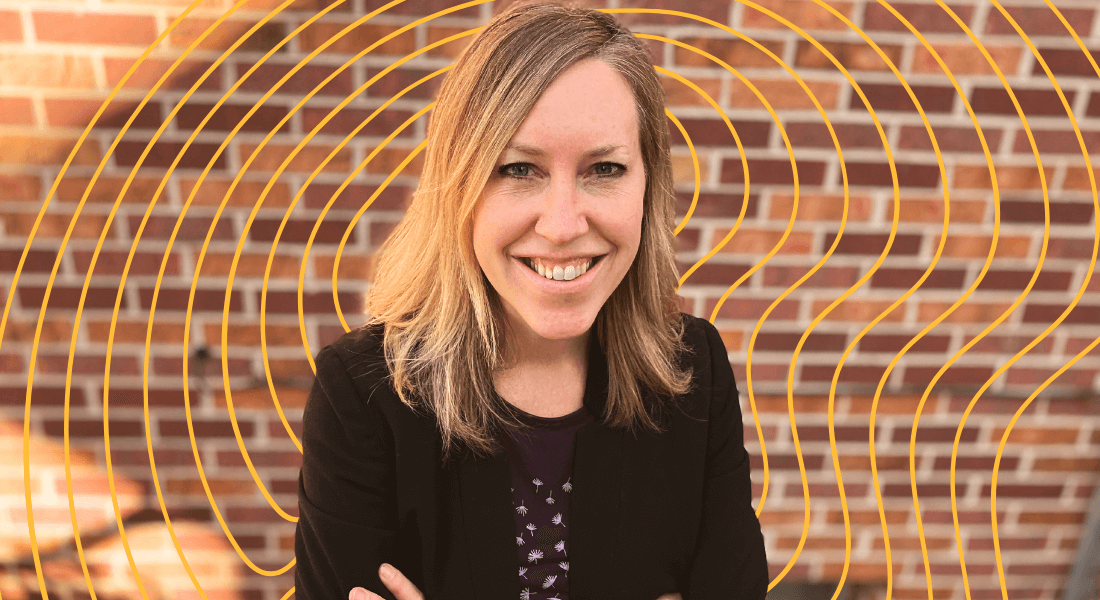
Professor Jenny Dauer will be leading the USE Center's mission to strengthen science education at the university level through discipline-based education research (DBER). Dauer is coming from a position as Professor at the University of Nebraska and will take the reins of the USE center on June 1st.
“I’m very excited to be a part of the important work of the USE Center,” she says.
“University science education faces real challenges today, and I believe that the USE Center is in a unique position to shape how we tackle them.”
As the head of a center spanning three universities — UCPH, AU and SDU — Jenny Dauer is looking forward to creating collaborative networks across the country.
“It’s really special how we can work together on improving science education across all of Denmark — both in terms of teaching practice, and in terms of fundamental knowledge about what the students experience, how they learn their disciplines and how they take on STEM identities.”
Asking big questions
At the University of Nebraska, Jenny Dauer has been a part of an emerging DBER field within biology. She has firsthand experience with what the establishment of a DBER environment requires on both an individual and system level. Her own research spans both DBER and Science Education in general.
“My undergraduate degree was in secondary education, so I was certified to teach secondary level science, but I wanted to do more science research,” says Jenny Dauer.
Dauer wrote her PhD in forest science, before returning to education with research on how students understand big, complex issues like climate change.
And just like students grappling with making sense of complex systems, education research must ask questions that allow us to look across the whole system, she says.
“Questions like: How do we prepare work-ready college graduates that fit the needs of today? How are we assessing student learning across the system? And are we doing it in ways that are inclusive and equitable? And, how do we recognize and support teaching that infuses evidence-based practices through scholarship?”
“I think we can ask some big questions that help us understand what's going on in Danish university teaching and pushes the system towards positive change.”
Leading the bike bus
With her to Copenhagen, Jenny Dauer is bringing husband Joe Dauer – who is also a biology education researcher – and their two boys aged 8 and 11. The move represents the family’s return to Europe after living for a year in the Netherlands in 2022-23, visiting the University of Utrecht.
“We really enjoyed living in Europe,” Jenny Dauer says.
“It’s exciting for our family to be in a place where we don't need a car and we can bike everywhere. Joe and the kids run a “bike bus” here in the United States for one day a week, where we’ll lead all the kids in the neighborhood to bike together to school to promote bike safety.”
University science education faces real challenges today, and I believe that the USE Center is in a unique position to shape how we tackle them.
Jenny Dauer is especially looking forward to meeting her new colleagues and learn about the system, culture and language.
“We're already heavily into Duolingo, trying to learn Danish,” she says.
“It’s incredibly exciting to have this new horizon and to work with Europeans on the emerging front of the DBER field.”
About Jenny Dauer
Jenny Dauer comes from a position as Professor in Science Literacy as well as Associate Director of Undergraduate Education in the School of Natural Resources at the University of Nebraska.
Before joining University of Nebraska in 2013, Dauer served as project director for Carbon TIME (Transformations in Matter and Energy) and developed research-based science curriculum for middle and high school students as a post-doc in the environmental literacy research group at Michigan State University.
Her graduate work included an M.S. in ecology at Penn State University and a Ph.D. in forest science at Oregon State University. Both degrees focused on the role of calcium in biogeochemical cycling.
Jenny Dauer did her bachelor's in Secondary Education with an emphasis on biology and environmental sciences at Penn State University and worked in informal K-12 education at the Franklin Institute Science Museum.